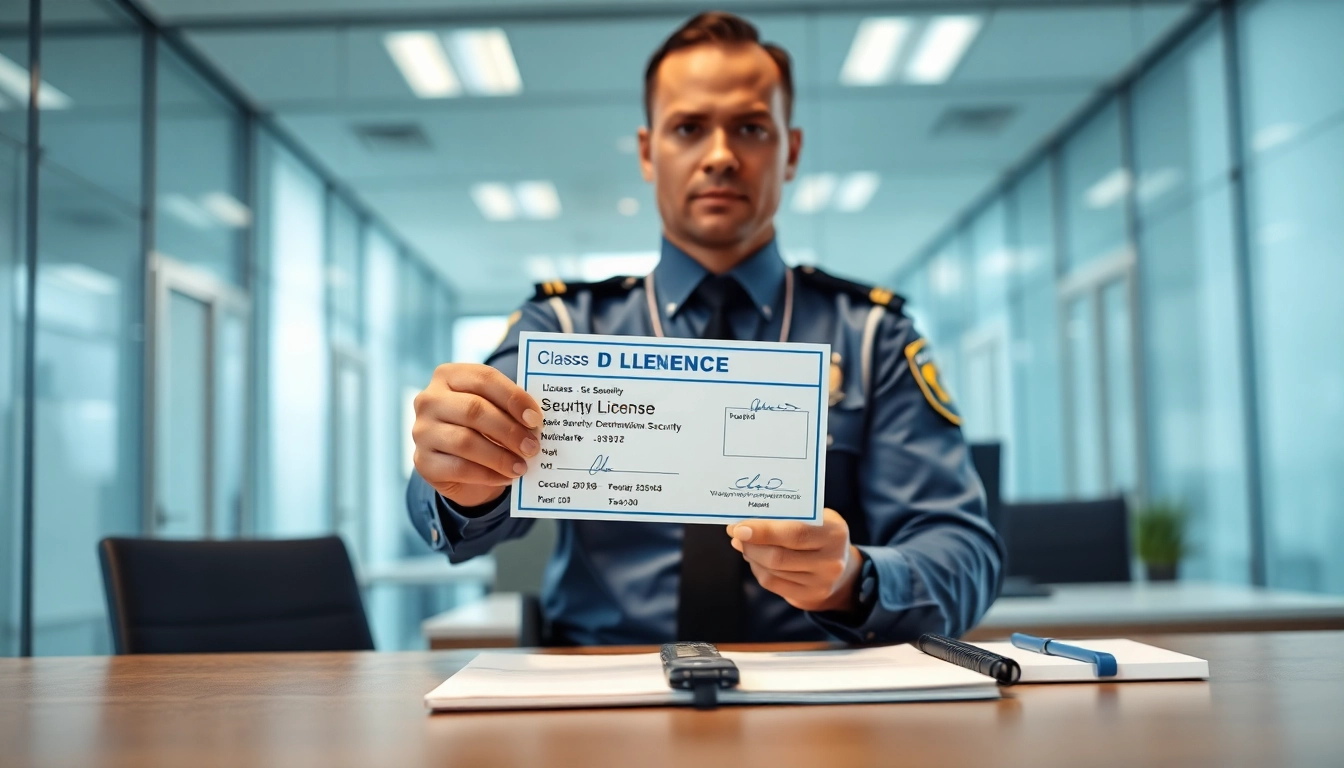
Introduction to Class D Security License
The security industry is a robust arena that offers various career opportunities for those looking to protect individuals, properties, and assets. A foundational requirement for many entry-level positions in the security sector is the class d security license. This license provides credentialing for individuals to operate legally and effectively in the domain of private security. Understanding the nuances and prerequisites of obtaining a Class D Security License is essential for anyone aspiring to enter this profession.
What is a Class D Security License?
A Class D Security License is a certification required in numerous jurisdictions for individuals who wish to work as unarmed security guards. This license signifies that the holder has met specific training and testing requirements established by state laws or regulatory bodies. It encompasses key skills needed to perform duties such as monitoring premises, responding to incidents, and ensuring the safety of individuals and property.
Importance of Class D Security License in the Industry
Holding a Class D Security License is crucial as it demonstrates a commitment to professionalism within the security sector. Employers often require this license to ensure that their team members are knowledgeable about essential protocols, legal responsibilities, and conflict resolution techniques. Additionally, the license serves to protect the public by mandating a standard level of training and ethical conduct.
Who Needs a Class D Security License?
Various security professionals benefit from obtaining a Class D Security License. This includes individuals seeking positions as security guards, campus safety officers, or event security personnel. Moreover, prospective candidates seeking advancement in their security careers often view this license as a stepping stone towards obtaining further certifications and licenses, enhancing employability and professional growth.
Requirements for Obtaining a Class D Security License
Basic Eligibility Criteria
To pursue a Class D Security License, applicants typically must meet certain eligibility requirements. Common prerequisites include:
- Age: Candidates generally must be at least 18 years of age.
- Cleans criminal background: Many jurisdictions conduct background checks, requiring applicants to have no felony convictions or significant legal infractions.
- Citizenship or legal residency: Applicants may need to provide proof of citizenship or authorized residency status in the country where they intend to work.
Necessary Training and Courses
Obtaining a Class D Security License often involves completing a specific number of training hours related to security principles and practices. Training may cover topics such as:
- Legal aspects of security work
- Emergency response protocols
- Conflict resolution
- Effective communication techniques
- Basic first aid and CPR
These comprehensive training programs can be found through various accredited security training institutions or community colleges.
Application Process for Class D Security License
Once an individual has completed the requisite training, the next step is to apply for the Class D Security License. The application process typically involves the following steps:
- Gather necessary documentation: This may include training completion certificates, identification details, and proof of residency.
- Submit the application: Complete the licensing application form either online or in person, depending on state regulations.
- Pay the associated fee: Licensing fees vary by jurisdiction, and applicants should be prepared to cover these costs upon submission.
- Background check: Undergo a mandatory background check, which may take several weeks to complete.
- Schedule an interview or examination: In some cases, applicants may be required to attend an interview or take further assessments.
Benefits of Class D Security License
Increased Job Opportunities
Acquiring a Class D Security License significantly enhances employment prospects within the security field. Employers often prioritize candidates who hold this certification, as it denotes a level of preparedness and professionalism. With a Class D Security License, job seekers can apply for a wider range of positions within various environments, such as retail, healthcare, education, and event management.
Enhanced Skills and Knowledge
Through the training and coursework associated with obtaining a Class D Security License, individuals gain valuable skills and knowledge. This education not only prepares them for specific job tasks but also fosters personal development in areas such as crisis management, interpersonal communication, and ethical decision-making. The competencies acquired through this process can significantly increase an individual’s confidence and effectiveness in the role of a security professional.
Legal Advantages of Holding Class D Security License
From a legal standpoint, holding a Class D Security License provides certain advantages, including lawful authorization to carry out security functions. Licensed security personnel are equipped with a clear understanding of the legal boundaries and responsibilities of their roles, reducing the risk of liability issues for themselves and their employers. Additionally, being licensed may improve the legitimacy of security services offered to clients.
Common Challenges in Securing a Class D Security License
Understanding Local Regulations
One of the primary challenges faced by potential licensees is navigating the varying regulations and requirements across different jurisdictions. Prospective applicants must thoroughly research their specific state or local licensing rules, as these can influence training requirements, application procedures, and lawful practices specific to the security domain.
Preparing for the Required Exams
For many individuals applying for a Class D Security License, the examination can be a daunting obstacle. These exams often assess applicants’ knowledge of legal statutes, security procedures, and emergency response strategies. To prepare effectively, candidates may consider enrolling in review courses, forming study groups, or utilizing practice tests to build confidence and ensure comprehensive understanding of the exam material.
Financial Considerations and Costs
The costs associated with obtaining a Class D Security License can pose challenges for some applicants. Expenses may include fees for training programs, application submissions, background checks, and examination costs. To mitigate financial burdens, individuals may explore options such as employer-sponsored training programs or financial aid resources available for vocational education.
Maintaining and Renewing Your Class D Security License
Continuing Education Requirements
In many jurisdictions, maintaining a Class D Security License requires ongoing education. This ensures that licensed security personnel remain updated on the latest laws, techniques, and best practices in the field. Continuing education may involve attending workshops, online courses, or participating in in-service training sessions offered by employers.
Renewal Process for Class D Security License
The renewal of a Class D Security License typically takes place every few years, depending on state mandates. To successfully renew, licensed individuals must submit documentation of completed continuing education courses, along with a renewal application and fee. Additionally, they may undergo a new background check as part of this process.
Staying Updated with Industry Standards
Remaining informed about industry trends and regulatory changes is crucial for licensed security professionals. Joining professional associations, subscribing to industry publications, and participating in networking events can help individuals stay connected to evolving standards and expectations within the security landscape.